Let's clear something up first: when people say "135mm film," they usually mean 120 medium format film. The confusion comes from the naming — 35mm film is sometimes called "135 film" (the Kodak designation), but the larger format is 120 or 220, not 135mm. Medium format cameras typically shoot 6x4.5cm, 6x6cm, or 6x7cm negatives on 120 film.
I spent years in the darkroom developing both formats. I've watched 35mm negatives emerge in the developer tray, their grain visible even before the image fully appears. I've held 6x6cm medium format negatives up to the light and marveled at their sheer size. Both formats are beautiful. Both are valid artistic choices. Neither is objectively "better."
the technical differences
negative size
The most obvious difference is physical size. A 35mm negative measures 24x36mm. A 6x6cm medium format negative is 56x56mm — nearly four times the surface area. More film real estate means more information captured, finer grain, and greater tonal range.
Think of it like painting a portrait: would you rather work on a 5x7 inch canvas or a 12x12 inch one? Both can produce stunning work, but the larger canvas gives you more room for subtle gradations.
grain and texture
This is where it gets interesting. 35mm film shows more visible grain — not because the film itself is grainier, but because the smaller negative needs more enlargement to print. That grain is part of 35mm's charm. It adds texture and warmth, a tactile quality digital can't quite replicate.
Medium format film, printed at the same size, shows finer grain and smoother tonal transitions. The larger negative doesn't need as much enlargement, so the grain structure stays tighter. The result is almost painterly — soft, dreamy, with an ethereal quality.
depth of field and bokeh
Medium format creates shallower depth of field at equivalent apertures due to the larger negative size. A portrait shot at f/2.8 on medium format has creamier bokeh and more subject separation than the same shot on 35mm at f/2.8.
For wedding photography, this matters. That dreamy, soft background blur that makes a portrait feel romantic? Medium format excels there. But 35mm at wider apertures can achieve similar separation with its own character — a bit more energetic, less precious.
the practical considerations
cost
Let's be honest: medium format is expensive. The cameras cost more, the film costs more, development costs more, scanning costs more. For a wedding, shooting medium format exclusively means shooting very selectively, which can mean missing spontaneous moments. 35mm gives more frames, more flexibility, more room to actually work.
speed and spontaneity
35mm cameras are generally faster to operate — smaller, lighter, quicker to focus. You can move with the moment. Medium format cameras, especially older ones like Hasselblads or Mamiyas, require more intention: manual focus, slower operation, each frame costs more so you think before you shoot.
For candid, documentary-style wedding photography, 35mm's speed is an advantage. For composed portraits, medium format's slower pace can actually be a benefit — it forces you to slow down and see more carefully.
when i choose each format
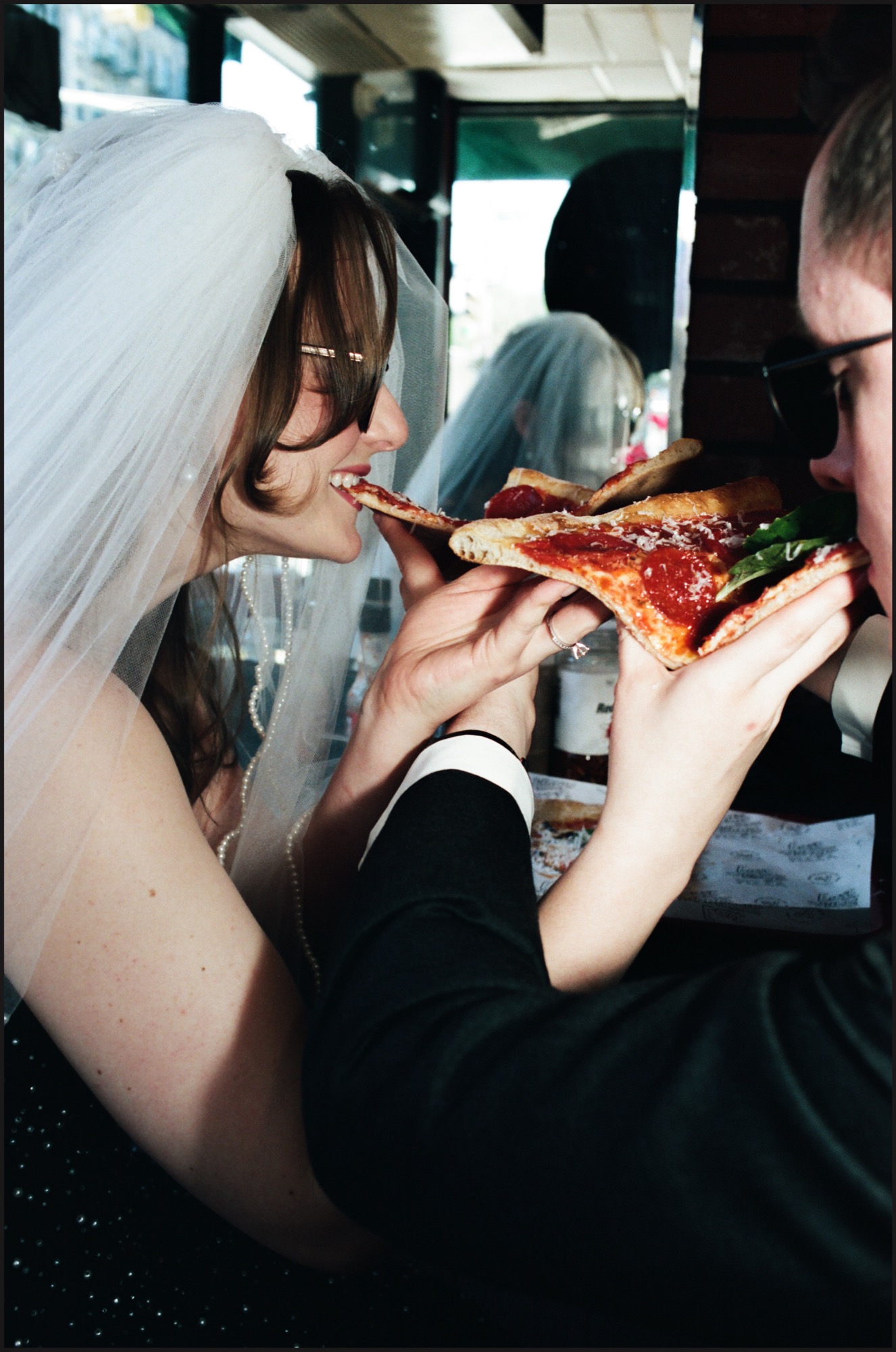
I shoot primarily on 35mm for weddings because I value spontaneity. I want to catch the moment someone's face transforms mid-laugh, the blur of movement on the dance floor, the quick stolen glance between newlyweds. 35mm keeps me fluid and responsive.
But I also appreciate what medium format brings to portraiture — that extra smoothness, the way light falls across skin tones, a dreamy quality that feels almost like memory itself. If I'm doing formal portraits with time and space to work deliberately, medium format is a beautiful choice.
the aesthetic choice
Here's what matters more than technical specs: what feeling do you want your images to have? 35mm feels energetic, lived-in, authentic — the grain says "this moment happened." Medium format feels more dreamlike, more composed, with a stillness to it even when capturing movement.
Neither is better. They're different languages for telling the same story. Some moments call for the raw immediacy of 35mm. Some deserve the quiet elegance of medium format. The skill is knowing which language to speak when.
my recommendation
If you're considering film for your wedding, don't get caught up in format wars. Ask your photographer what they shoot and why. Look at their work. Does the grain enhance the emotion, or distract from it? Does the aesthetic match the feeling you want for your day?
Film, in any format, requires intention. It costs more. It's riskier. You can't see the results immediately. But what you get in return is images that feel permanent, tactile, real — texture and warmth that digital struggles to replicate.
That's what matters. Not the format size, not the grain count. The feeling. The memory. Evidence that something beautiful happened and was worth preserving on silver and light.